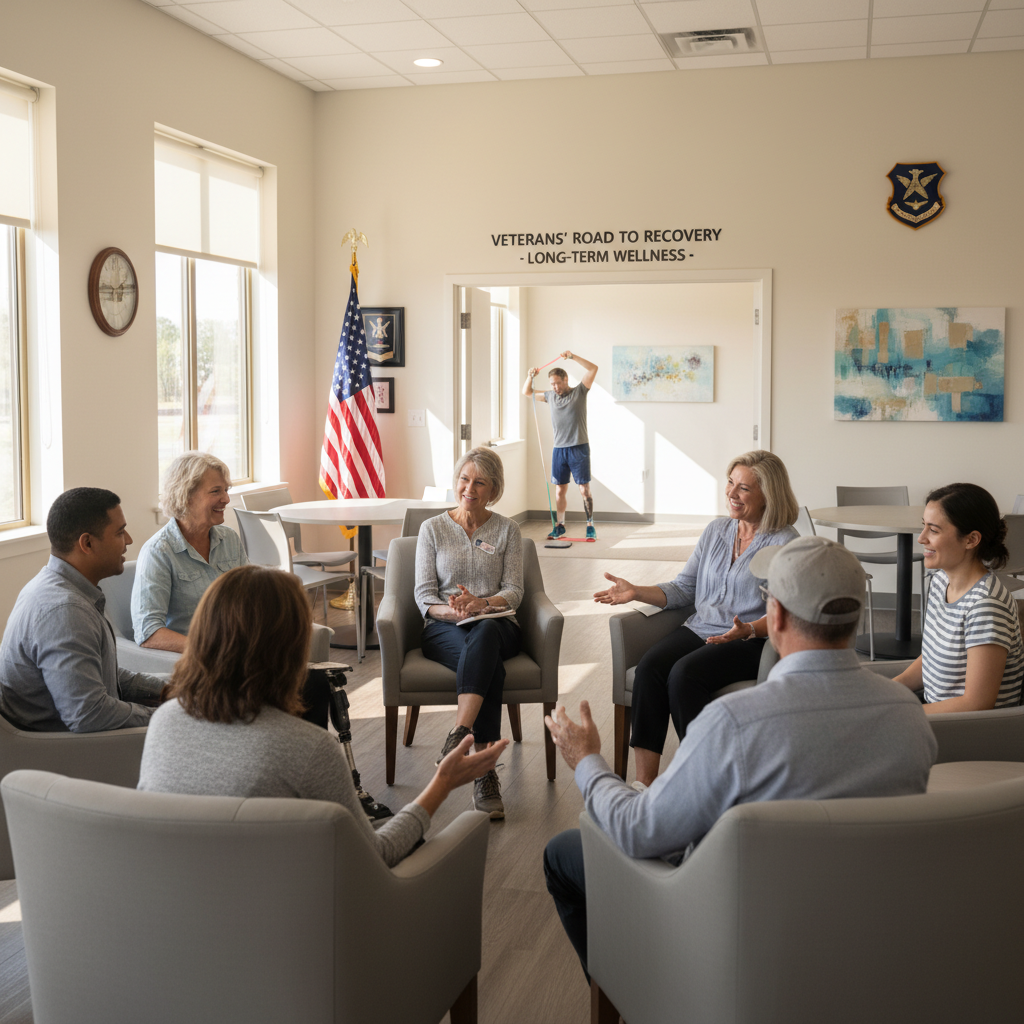
Structured outpatient recovery for veterans offers a powerful middle path between residential rehab and traditional weekly therapy. You receive intensive, clinically supervised care while continuing to live at home, maintain relationships, and gradually rebuild your daily life in real time. For many veterans and their families, this blend of structure and flexibility is exactly what makes recovery sustainable.
In this guide, you will explore how structured outpatient recovery for veterans works, why it is effective, and how you can choose the right program to support long term healing and reintegration.
Understanding structured outpatient recovery for veterans
Structured outpatient recovery for veterans is a treatment approach that allows you to live at home or in a sober living environment while attending scheduled therapy and support sessions several times a week. These programs are designed to treat substance use, PTSD, depression, and other co occurring conditions within the context of your military experiences and current responsibilities.
Veteran focused outpatient care often includes standard outpatient services, intensive outpatient programs (IOPs), and partial hospitalization programs (PHPs). IOPs and PHPs offer a higher level of support and more frequent treatment sessions than traditional office based therapy, and they can serve as either an entry point into care or a step down from residential treatment [1].
You participate in a structured weekly schedule that might include individual therapy, group therapy, skills training, medication management, and family support. The structure helps stabilize your recovery, while the outpatient format gives you space to practice new skills in your everyday environment.
How structured outpatient programs support daily life integration
One of the most powerful aspects of structured outpatient recovery for veterans is the way it supports real life integration. You are not healing in isolation. You are learning how to stay sober, manage symptoms, and build a healthier life while still engaging with your home, work, school, or community.
Structured outpatient programs for veterans allow you to live at home or in sober living while participating in scheduled therapy sessions that address substance use and relapse prevention. Many programs offer flexible scheduling, including evenings and weekends, to help you maintain your responsibilities [1].
This model lets you apply coping strategies in real time. You might have group therapy in the afternoon, then go home and immediately use what you learned in a difficult conversation, a stressful work call, or a challenging trigger. Your treatment team can then help you debrief and refine those skills in the next session, creating a powerful feedback loop between treatment and real life.
If you are balancing a demanding role or career, you might also look for a veteran program that mirrors the framework of an executive outpatient recovery program, which is designed to support professionals who must stay engaged in their work while pursuing intensive care.
Clinical structure and evidence based therapies
The strength of structured outpatient recovery for veterans lies in its clinical backbone. These programs are not casual support groups. They are organized, medically informed treatment plans designed around your needs as a veteran.
Structured outpatient programs for veterans typically include evidence based therapies such as cognitive behavioral therapy, motivational interviewing, and family therapy, all tailored to your unique experiences and triggers [2]. Your treatment plan is usually built during a multi step admission process that clarifies your diagnosis, risk factors, current stressors, and personal goals [2].
You might engage in:
- Individual therapy to work through trauma, moral injury, or transition stress
- Group therapy with other veterans who understand your background
- Skills based sessions focused on relapse prevention, emotion regulation, and communication
- Medication management for PTSD, depression, anxiety, or cravings
For veterans with more complex clinical presentations, it can be helpful to seek out a program that resembles a high-acuity addiction care outpatient model. These programs are designed to manage higher risk symptoms within an outpatient structure, which can be important if you have multiple diagnoses or a history of severe relapse.
The role of peer support and veteran culture
Recovery often becomes more powerful when you do not have to explain your culture or experiences in every conversation. Veteran specific outpatient programs are built around this reality. You share groups, skills classes, and informal support spaces with others who have served, which can reduce shame and increase engagement.
Peer support models can directly improve treatment retention. For example, the Home Base Veteran Outreach Team, comprised of veterans, helped reduce dropout rates by 17 percent among participants who received outreach, compared with those who did not [3]. When outreach, coaching, or group leadership comes from other veterans, it often feels more trustworthy and relevant.
If you are also returning to a professional role, pairing veteran peer support with a peer support group for professionals can help you manage both identity layers at once. You are able to discuss service related trauma and workplace stress in spaces designed to hold both.
Balancing outpatient care with work, school, and family
Many veterans hesitate to seek residential care because of employment, education, or caregiving responsibilities. Structured outpatient recovery for veterans is powerful in part because it recognizes that your responsibilities do not disappear when you start treatment.
Intensive outpatient and partial hospitalization options allow you to receive multiple hours of care per week, at a level appropriate to your symptoms, while keeping you physically present in your daily roles [1]. Programs with evening or weekend tracks are particularly helpful if you are working shifts or finishing a degree.
If your career is a major part of your identity, you may also benefit from resources that focus specifically on career reintegration after addiction. These services help you navigate licensing issues, workplace disclosure, performance concerns, and the slow work of rebuilding professional confidence.
For veterans who are also young adults, combining a veteran outpatient track with elements of addiction treatment for young adults can ensure that both developmental and service related needs are addressed.
Comparing outpatient and residential options for veterans
Deciding between structured outpatient recovery for veterans and a residential program often comes down to your current risk level, home environment, and symptom severity. Both options provide structured, clinically led care, but they deliver it in different formats.
The U.S. Department of Veterans Affairs operates about 250 residential rehabilitation programs for mental health, across roughly 120 sites, with capacity for more than 6,500 veterans as of August 2025 [4]. These programs provide 24/7 care in a residential setting and typically last around six weeks, though stays can range from a few weeks to several months depending on your needs [4].
In residential care, you are removed from your usual environment. Your days are filled with classes, counseling, peer interactions, and activities, all aimed at stabilizing symptoms and building foundational skills [4]. For some veterans, this level of containment is essential at the start of recovery.
In outpatient care, you receive similar therapies but return to your own bed at night. The structure is still present, but the context is more porous. You can attend therapy in the morning, care for your children in the afternoon, and practice relapse prevention during a real world trigger in the evening. For many veterans, especially after an initial residential stay, this is where long term relapse prevention work becomes most meaningful.
Women veterans may also consider how gender specific needs intersect with service history. The VA operates specialized residential programs tailored to women that address sexual trauma, intimate partner violence, and reproductive health, and provide access to women clinicians and secure accommodations [4]. In the outpatient space, pairing a veteran program with resources such as women’s mental health and recovery can help cover this ground.
Specialized tracks that match your life
Not every veteran needs the same kind of outpatient program. Structured outpatient recovery is powerful because it can be tailored to your lifestyle, career, spiritual framework, and health status.
You might see specialized tracks such as:
- Programs designed for professionals, aligned with addiction treatment for professionals
- Tracks built for healthcare staff that mirror addiction treatment for healthcare workers
- Gender specific tracks similar to men’s addiction treatment iop when male bonding and shared experiences support your healing
- Faith informed options that reflect a faith-based addiction recovery track
When these specialized tracks are embedded within a veteran focused outpatient program, your care team can address military trauma, role expectations, and current responsibilities together instead of in isolation. You are seen as a whole person, not just as a diagnosis or a single identity.
Admission, assessment, and matching the right level of care
Starting structured outpatient recovery for veterans usually involves several coordinated steps. This process is not meant to be a barrier. It is designed to reduce uncertainty and ensure that you receive the level of care that actually fits your needs.
Admission commonly includes:
- An initial screening to understand your immediate safety and substance use patterns
- A comprehensive clinical assessment to clarify diagnoses and co occurring conditions
- A functional and social review to consider housing, employment, family, and support systems
- A collaborative treatment planning session that outlines your goals, schedule, and therapies
This multi step process helps match you with the most appropriate level of care, which can decrease anxiety and improve treatment alignment with your personal goals [2]. If your symptoms intensify or your circumstances change, your team can adjust the plan or recommend a higher level of care, such as a PHP or residential program.
If staying abstinent has been especially difficult, you might also explore a veteran outpatient recovery program that includes built in outpatient relapse prevention for veterans, so that relapse planning is central from the beginning rather than an afterthought.
Aftercare, relapse risk, and long term maintenance
One of the clearest findings in veteran addiction research is that treatment cannot end when the formal program does. Nearly 94 percent of veterans in one large dataset relapsed within a year of completing treatment when adequate aftercare was not in place [5]. This statistic does not mean that recovery is impossible. It illustrates how essential ongoing support is.
Effective structured outpatient programs build aftercare into your plan from the start. You might transition from an IOP schedule to weekly therapy and then to monthly check ins, all while staying connected to peer support, family education, and community resources.
To support long term stability, you can look for programs that emphasize:
- Outpatient relapse prevention for veterans grounded in your actual triggers
- An alumni support and aftercare program that keeps you connected beyond discharge
- A focus on long-term addiction recovery maintenance strategies such as ongoing therapy, medication support, and structured routines
- Family supported continuing care to help loved ones understand their role in relapse prevention
These layers of support transform structured outpatient recovery into a continuous journey instead of a time limited event.
Family involvement and support systems
Recovery rarely happens in isolation. Structured outpatient recovery for veterans often invites families or close supports into the process through education sessions, couples therapy, or family groups. The Home Base outpatient clinic, for example, provides multidisciplinary services for both veterans and family members, including individual, group, and couples therapy. In 2023, 79 percent of family members surveyed said they would recommend these services [3].
Family involvement can:
- Decrease misunderstandings around PTSD, depression, and addiction
- Provide a more consistent home environment that supports sobriety
- Help you rebuild trust and communication
- Reduce caregiver burnout and resentment
If your relationships have been strained, an outpatient model allows you to work on them in real time. You can learn skills in session, test them in daily interactions, and refine them with your therapist. Structured supports like family supported continuing care give loved ones a clear framework for staying engaged without taking over your recovery.
Access, insurance coverage, and affordability
Even the strongest program is only helpful if you can access it. Structured outpatient recovery for veterans is often more accessible than residential care because it does not require you to leave home, and in many cases it is less expensive.
Veterans can access outpatient programs through VA health care, TRICARE, private insurance plans like Cigna, BCBS, UHC, and Anthem, and through subsidized care offered by nonprofits such as Home Base [2]. The VA provides outpatient rehab services through onsite programs, telehealth, rural and mobile clinics, and more than 750 community based outpatient clinics, which expands access for veterans in both rural and urban settings [1].
The VA generally covers most outpatient treatment services for enrolled veterans, and some family support services may also be included. If you have additional coverage like Medicare, Medicaid, or TRICARE, you may be able to combine benefits to help offset remaining costs [1].
When you are evaluating programs, it is appropriate to ask directly about costs, insurance contracts, and payment options. You can also explore how outpatient care fits into a broader plan that might include outpatient program for sustained sobriety or a holistic aftercare addiction program after intensive work is complete.
Building wellness, connection, and meaning
Ultimately, structured outpatient recovery for veterans is not just about stopping substance use. It is about building a life that feels worth protecting. That involves physical wellness, community, purpose, and a sense of belonging outside of the military.
Many programs integrate structured wellness in recovery through activities like movement, nutrition support, mindfulness, or creative therapies. Others emphasize community integration in recovery, helping you connect with volunteer roles, community organizations, or peer led groups that align with your values.
If spirituality or faith is important to you, exploring a faith-based addiction recovery track within or alongside a veteran outpatient program can help bring that dimension into your healing. For some veterans, reclaiming or redefining spiritual beliefs becomes a central part of long term stability.
Recovery is often a gradual layering of supports. A veteran focused outpatient program, combined with specialized tracks, family involvement, aftercare, and wellness practices, can give you a durable framework for healing. With the right structure and the right fit, you are not just leaving substances behind. You are learning how to live fully, on your own terms, with the same courage and commitment that carried you through your service.