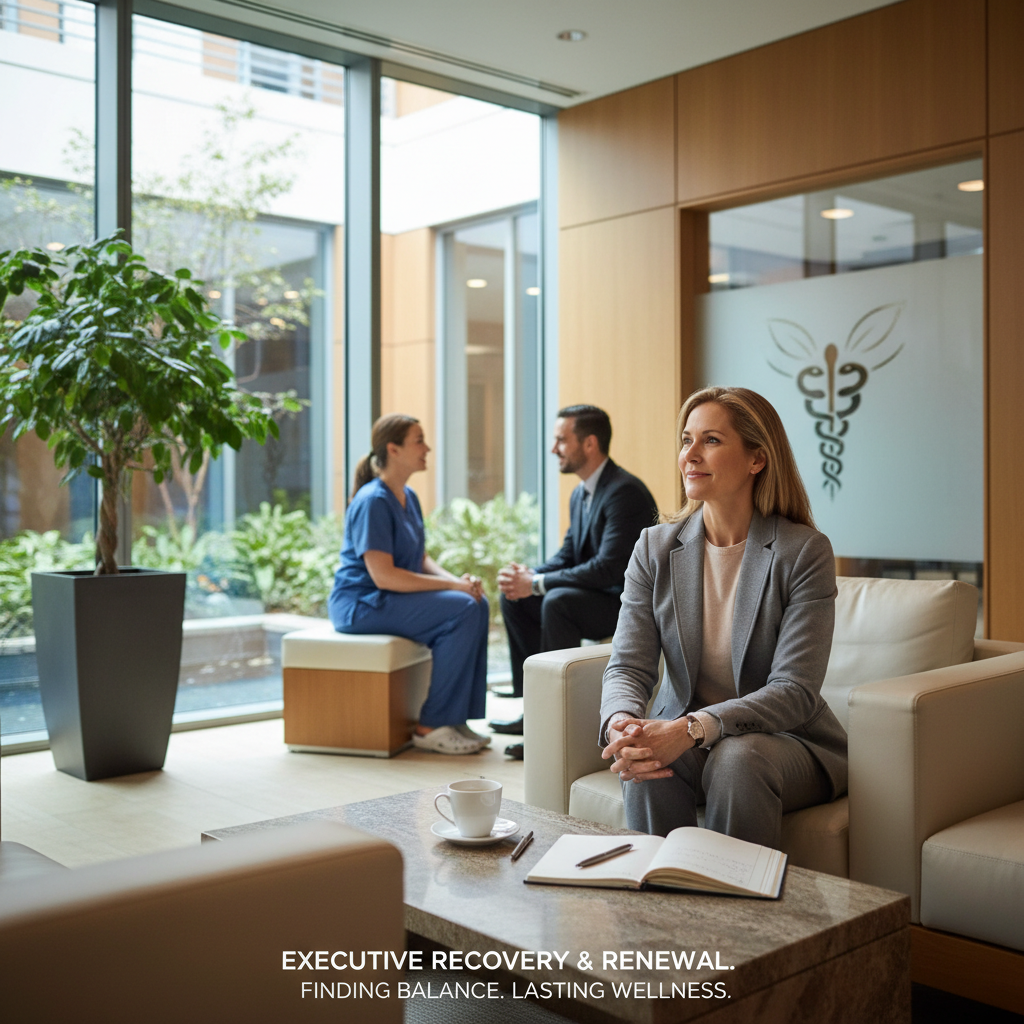
Understanding executive outpatient recovery programs
If you are exploring addiction treatment but cannot step away from work, family, or community responsibilities, an executive outpatient recovery program may offer the balance you need. These programs are designed for professionals, veterans, young adults, and high acuity clients who require a clinically supervised level of care while remaining active in daily life.
An executive outpatient recovery program combines structured, evidence-based treatment with flexibility, privacy, and specialized tracks that align with your lifestyle and career. You attend therapy and support sessions several days per week, then return home or to work, so you can apply new skills in real time.
How executive outpatient care compares to other levels of care
Executive outpatient recovery typically sits between standard outpatient counseling and inpatient or residential treatment in terms of structure and intensity. This middle path can provide strong clinical support without removing you from your environment.
Intensive outpatient structure and effectiveness
Many executive outpatient programs are built on an Intensive Outpatient Program, or IOP, model. Research on IOPs shows:
- Most IOPs provide at least 9 hours of care each week, often delivered as three 3 hour sessions that you attend on weekdays or evenings [1].
- People in IOPs remain at home and in their communities, which can improve adjustment to everyday life compared to being in a 24 hour facility [1].
- Across multiple studies, 50 to 70 percent of IOP participants reported abstinence at follow up, with outcomes that were comparable to inpatient or residential treatment for many individuals [1].
These findings suggest that for many people, the intensity and duration of treatment matter more than whether it occurs in a hospital or residential setting [1]. If your situation is medically stable but you need substantial support, an executive level IOP can be a strong fit.
When higher or lower levels of care are needed
Not everyone is an ideal candidate for executive outpatient recovery. Some circumstances may call for a different level of care, such as:
- Recent suicide attempt or active suicidal ideation
- Uncontrolled medical or psychiatric conditions
- Severe withdrawal risk that requires 24 hour medical monitoring
Research indicates that people with the most severe substance use disorders or acute safety concerns may do better in inpatient or residential care, at least initially [1].
On the other hand, if you have already completed a higher level of care, an executive outpatient recovery program can be a logical next step in your outpatient program for sustained sobriety and long-term addiction recovery maintenance.
Who executive outpatient programs are designed for
Executive outpatient care is not only for CEOs. It is for anyone whose responsibilities or status require discretion, flexibility, and specialized support.
Working professionals and executives
If you are in a leadership role, self employed, a healthcare provider, or a high visibility professional, stepping away from work for weeks at a time may feel impossible. Executive outpatient programs are built with this in mind.
According to national providers, executive programs allow you to continue seeing clients, attending meetings, and sometimes traveling for work while engaging in treatment for substance use and mental health concerns [2]. Many centers provide secure Wi Fi, phones, computers, and private conference rooms so you can manage essential tasks between sessions [3].
If you want more information tailored to your role, you can also explore addiction treatment for professionals, addiction treatment for healthcare workers, and our peer support group for professionals.
Veterans and high acuity clients
Executive outpatient recovery can also be adapted for veterans and high acuity clients who need more structure than traditional outpatient care. Programs often include:
- Trauma informed therapies
- Close psychiatric involvement
- Coordination with medical and community resources
If you have served in the military, a veteran outpatient recovery program, structured outpatient recovery for veterans, or outpatient relapse prevention for veterans can be integrated into an executive level plan.
Similarly, if you require a higher clinical touch because of complex mental health or medical needs, high-acuity addiction care outpatient services can be layered into your schedule.
Young adults and gender specific needs
Young adults often need support that addresses identity, independence, and early career or education paths. Executive outpatient structures can accommodate class schedules, internships, or entry level jobs while still delivering frequent therapy. You can learn more about addiction treatment for young adults within this framework.
Gender specific tracks may also be available within an executive outpatient model, such as men’s addiction treatment iop or programs focused on women’s mental health and recovery. These tracks can address gender based stressors and relationship dynamics while maintaining professional privacy.
Core elements of an executive outpatient recovery program
Although each facility designs its own approach, most executive outpatient programs share several core features.
Schedule, intensity, and structure
Executive outpatient programs usually provide:
- 3 to 5 treatment days per week
- 3 to 4 hours of programming each day
- A blend of daytime, evening, or weekend options for maximum flexibility
For example, one executive IOP model offers 3 to 4 hours per day, 3 to 4 days per week, over about 12 weeks, with phases that move from stabilization to relapse prevention and preparation for full return to work or school [4].
This type of structure keeps you accountable while allowing room for your responsibilities and your own structured wellness in recovery plan.
Evidence based therapies and clinical services
Most executive outpatient recovery programs rely on research backed treatments, which may include:
- Cognitive Behavioral Therapy to help you identify and change the thoughts and behaviors that drive substance use
- Dialectical Behavior Therapy for emotional regulation, distress tolerance, and interpersonal skills
- Group therapy to reduce isolation and build peer support
- Individual psychotherapy tailored to your history and goals
- Family or couples sessions to repair communication and set healthy boundaries
Programs like the executive outpatient offering at Freedom Recovery in Ohio provide CBT, DBT, group therapy, family therapy, and telehealth options within a flexible schedule [5].
Many executive programs also coordinate with psychiatry, medical providers, and wellness practitioners to address both mental health and physical health concerns.
Detox support and medication assisted treatment
If you need help with withdrawal or cravings, some executive outpatient programs can either provide or coordinate:
- Outpatient detox with regular medical evaluation
- Medication Assisted Treatment with medications like buprenorphine or naltrexone, combined with counseling and monitoring [5]
This approach can be especially helpful if you must remain at home and stay connected to work while beginning your recovery process.
Holistic and lifestyle oriented care
Executive outpatient programs frequently incorporate holistic or wellness based services. These may include:
- Mindfulness and meditation
- Yoga, acupuncture, or other integrative therapies
- Stress management and sleep hygiene coaching
- Nutrition and physical activity planning
These elements are designed to help you build sustainable routines that support your mood, energy, and focus. In some programs, spa like or fitness amenities are available to mirror the comfort level you are used to in your daily life [6]. You can extend these habits through a holistic aftercare addiction program.
Specialized tracks that fit your life
One of the strengths of an executive outpatient recovery program is the ability to tailor treatment tracks around your specific life context.
Career focused support and reintegration
Because your work is often central to your identity and stability, executive programs pay particular attention to career issues. This may involve:
- Coaching around disclosure decisions and workplace boundaries
- Support for handling professional stressors without substances
- Planning for gradual or full return to duties
If you are concerned about how to rebuild your role or reputation, a dedicated track for career reintegration after addiction can be an important part of your plan.
Faith based and values aligned options
For some, faith and spirituality are essential to meaning and motivation. Many executive outpatient centers offer optional faith informed or spiritually integrated tracks. These can help you explore:
- How addiction has affected your relationship with your beliefs
- How to draw on faith based communities for support
- How to align recovery goals with deeply held values
If this resonates with you, a faith-based addiction recovery track can be woven into your overall program.
Community integration and real world practice
Because you remain in your home and work environments, executive outpatient care emphasizes practical skill building. You are encouraged to:
- Test new coping strategies in everyday situations
- Strengthen sober social networks
- Engage with community resources that support ongoing wellness
A focus on community integration in recovery helps you create a life that supports sobriety instead of undermining it.
One advantage of executive outpatient care is that you can work on the same stressors that once fueled your addiction, but now with a clinical team and peers beside you.
Privacy, discretion, and professional protections
Confidentiality is a central concern for many people considering executive outpatient care. Programs are built to reduce stigma and protect your professional standing.
Executive rehab providers describe several common privacy safeguards:
- Strong confidentiality policies and secure electronic records
- Options to avoid using insurance in some settings, which can limit formal documentation of treatment [3]
- Private entrances or scheduling designed to reduce visibility
- Limited sharing of information with employers, governed by consent and legal requirements
Some programs also support professionals who must meet specific monitoring or reporting standards in order to safely resume work. This can include detailed documentation for licensing boards or workplace agreements [4].
If you are uncertain about how treatment may intersect with your career, it is important to ask each program how they handle disclosure, documentation, and communication with third parties.
How long treatment lasts and what happens next
Many executive outpatient recovery programs use a phased approach over several weeks or months.
Typical program length and phases
While exact timelines differ, you will often see:
- 30 day intensive phases that focus on stabilization and initial skill building
- 60 or 90 day extended treatment plans that deepen insight, relapse prevention, and lifestyle change
Research has shown that completing the full recommended length of treatment, followed by structured aftercare, is associated with better long term outcomes [2].
Some executive programs, such as one 12 week model, organize treatment into phases like:
- Orientation and stabilization
- Education and integration of new skills
- Introspection and relapse prevention planning
- Preparation for full time work or school, with the option of extended care if needed [4]
Your clinical team will adjust intensity and duration based on your progress and any ongoing mental health needs.
Continuing care and long term support
Finishing an executive outpatient program is a milestone, not the end of the journey. To protect your gains, you may step down into:
- Weekly or biweekly therapy or psychiatry appointments
- Peer groups that match your role or identity
- Alumni networks and ongoing check ins
Options such as an alumni support and aftercare program, family supported continuing care, and structured outpatient relapse prevention for veterans can keep you connected and accountable. Many people also continue their structured wellness in recovery routines and outpatient program for sustained sobriety for months or years.
Involving your family and support system
Your relationships can be a powerful resource in executive outpatient recovery. Most programs encourage some level of family involvement, tailored to your preferences and safety.
This may include:
- Psychoeducation sessions so loved ones understand addiction, mental health, and relapse warning signs
- Family or couples therapy to address communication patterns and rebuild trust
- Guidance on healthy boundaries, including expectations about work, finances, and privacy
With time, this kind of family supported continuing care can help your home environment become a stabilizing force rather than a stressor.
Deciding if an executive outpatient program is right for you
Choosing the right level and style of care is a personal decision. You may be a good fit for an executive outpatient recovery program if you:
- Need structured, evidence based treatment but cannot leave work, school, or caregiving for weeks
- Want a higher degree of privacy and discretion than standard programs typically offer
- Are medically and psychiatrically stable enough to live at home, with support
- Value specialized tracks that match your role, identity, or faith tradition
- Are ready to apply new skills in real time in your actual environment
If you are unsure, a clinical assessment can help clarify whether executive outpatient, high-acuity addiction care outpatient, residential care, or a combination is most appropriate.
By choosing a program that respects both your need for healing and your real world responsibilities, you give yourself a better chance at sustainable, long term recovery that fits your life.