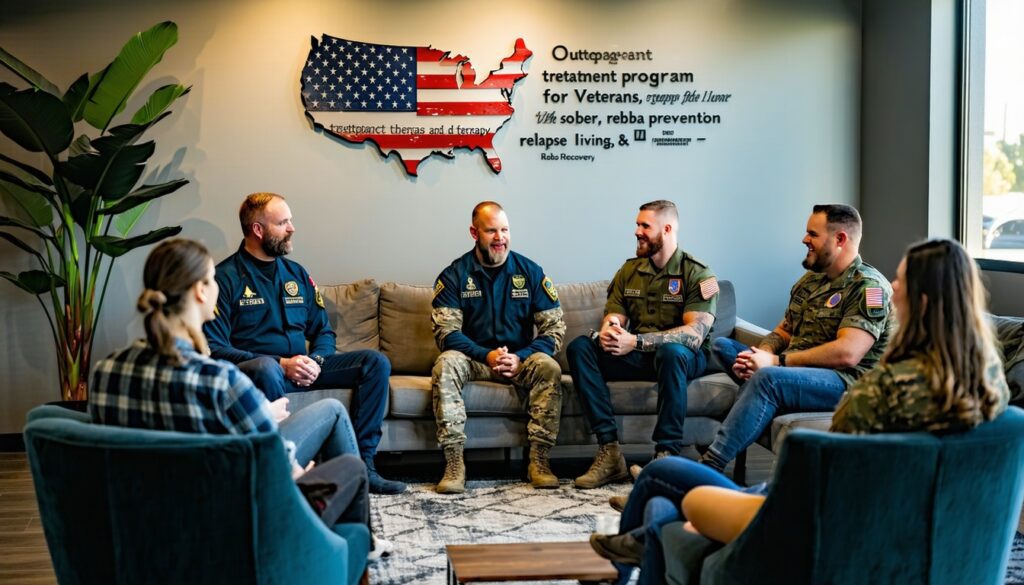
If you are searching for an outpatient treatment program for veterans, you may wonder how this level of care fits into your recovery journey. Outpatient treatment offers a flexible, part-time approach that allows you to live at home, maintain work or family responsibilities, and still access the support you need to overcome substance use disorders.
Throughout this article, you will learn how outpatient care is structured for veterans, what evidence-based therapies are available, how to navigate insurance and coverage, and how to plan for aftercare and relapse prevention. By the end, you’ll have a clear roadmap for taking control of your recovery.
Outpatient treatment overview
Outpatient care provides structured medical and behavioral health services without requiring you to reside at a facility. It’s designed for veterans who have mild to moderate substance use disorders and a stable home environment. You can attend scheduled sessions—individual counseling, group therapy, medication management—and then return to your daily routine.
VA outpatient services
The U.S. Department of Veterans Affairs offers a range of outpatient programs tailored to veterans’ needs. You can access:
- Counseling and therapy sessions for substance use, PTSD, depression, and anxiety
- Support groups led by peers or professionals
- Medication-assisted treatment and medication management
- Referrals to community care partners if your local VA clinic lacks specific services [1]
Nearly 200 VA PTSD specialty care programs are delivered at VA Medical Centers and large Community Based Outpatient Clinics (CBOCs), using highly recommended treatments such as Cognitive Processing Therapy, Prolonged Exposure, or EMDR. For veterans living far from a VA center, telemental health lets you connect with providers over phone or video [2].
Key features of outpatient care
Outpatient programs share several core components that support lasting recovery:
- Comprehensive assessment and individualized treatment planning
- Evidence-based therapies delivered in individual and group settings
- Coordination of care for co-occurring mental health issues such as PTSD or depression
- Education on relapse prevention and life skills training
- Access to peer support and community resources
- Flexible scheduling to accommodate work, school, or family commitments
By balancing your treatment needs with your personal responsibilities, outpatient rehab can help you build coping strategies and make steady progress without stepping away from your support networks.
Veteran-specific program options
Veteran-focused outpatient programs often integrate military culture and peer support to foster trust and engagement. You can choose from VA-run services, community Vet Centers, or specialized programs offered by nonprofit and private providers.
Community Vet Centers and telehealth
Vet Centers provide free private counseling for eligible veterans, including alcohol and drug assessments, trauma support, and family services. There are over 300 community locations nationwide, plus phone-based counseling for veterans who cannot visit in person [2].
Telehealth expands your options further:
- Schedule therapy or medication check-ins via secure video
- Access trauma-focused group sessions without travel
- Receive case management and peer coaching remotely
The BeThere peer support program connects you with trained veteran or military spouse coaches around the clock, helping you stay motivated and on track for recovery [3].
Specialized SUD programs
Depending on your substance use history and co-occurring conditions, you can enroll in outpatient tracks that focus on specific addictions or dual diagnosis care:
- Opioid use disorder: an opioid addiction treatment outpatient program offering counseling plus medication-assisted therapy
- Alcohol dependence: alcohol treatment program outpatient level with group support and relapse prevention
- Stimulant addiction: stimulant addiction outpatient rehab integrating behavioral therapy
- Benzodiazepine misuse: outpatient program for benzo addiction designed for tapering and counseling
- Cocaine recovery: cocaine addiction outpatient treatment with evidence-based relapse strategies
- Marijuana dependence: marijuana addiction treatment outpatient using psychoeducation and peer groups
- Polysubstance use: polysubstance addiction outpatient care addressing multiple dependencies
Specialized tracks ensure that you receive focused care for your unique needs, whether you’re managing withdrawal symptoms or rebuilding life skills after treatment.
Evidence-based therapies for veterans
Outpatient programs emphasize treatments that are scientifically proven to reduce symptoms and improve functioning. You’ll often participate in both trauma-focused and addiction-focused therapies to address the full scope of your recovery needs.
Trauma-focused therapies
Many veterans benefit from therapies that help process traumatic memories and reduce PTSD symptoms:
- Cognitive Processing Therapy (CPT): 7–15 weekly sessions help you identify, evaluate, and modify unhelpful beliefs related to trauma [4]
- Prolonged Exposure (PE): systematic, controlled exposure to trauma reminders to lessen avoidance and distress
- Eye Movement Desensitization and Reprocessing (EMDR): guided bilateral stimulation to reprocess traumatic memories
- Written Exposure Therapy: five sessions in which you write about traumatic events to reduce distress and improve coping
These approaches typically require 5–16 sessions and can be delivered individually or in group settings, in person or via telehealth.
Substance use interventions
To address addiction directly, outpatient care may include:
- Cognitive Behavioral Therapy for Depression (CBT-D): 12–16 sessions targeting negative thought patterns that fuel substance use [4]
- Acceptance and Commitment Therapy for Depression (ACT-D): 10–16 sessions helping you align actions with core values
- Skills-based Outpatient Addiction Recovery (SOAR): intensive group therapy for co-occurring SUDs and mental health conditions, showing significant reductions in substance use and depression [5]
- Dual diagnosis care: outpatient program with dual diagnosis treatment combining psychiatric care and addiction counseling
By integrating these therapies, you can build resilience, develop healthy coping strategies, and reduce the risk of relapse.
Insurance and coverage options
Understanding how outpatient care is funded can ease financial concerns and help you choose a program that fits your budget.
VA benefits and community care
If you’re enrolled in VA health care, most outpatient substance use and mental health services are covered. This includes counseling, medication management, and specialty programs for PTSD, MST (military sexual trauma), and other conditions [2]. You may also be referred to Community Care partners when VA clinics lack specific services.
Private insurance and other payers
Veterans with private insurance, Medicare, Medicaid, or TRICARE can often combine benefits to cover non–service-related conditions, medications, and copayments [6]. Coverage varies by plan, so confirm your benefits and provider network. Popular options include:
- Blue Cross Blue Shield: outpatient rehab that takes bcbs insurance
- Cigna: addiction treatment program that accepts cigna
- Aetna: outpatient addiction treatment that takes aetna
- United Healthcare: drug rehab program that accepts uhc
- Anthem: drug rehab that accepts anthem insurance
Low-income veterans may also qualify for Medicaid or Medicare coverage of outpatient services. Always verify eligibility, copays, and session limits before enrolling.
Program duration and scheduling
Outpatient programs vary in length, format, and intensity to meet diverse needs.
Typical program length
Most outpatient tracks span several weeks to several months, depending on:
- Severity of addiction or co-occurring mental health issues
- Type of therapy (e.g., trauma-focused protocols are often 7–15 weeks)
- Your personal goals and provider recommendations
For example, CBT-D may run 12–16 weeks, while a general outpatient substance use track could last 8–24 weeks.
Session formats and frequency
Scheduling options accommodate your lifestyle:
- Individual counseling: weekly 45–60-minute sessions
- Group therapy: 60–90-minute meetings, 1–3 times per week
- Medication management: monthly or biweekly check-ins
- Telehealth appointments for therapy or case management
Some programs serve as a step-down after residential care—see our outpatient program for alcohol detox step down for options that bridge inpatient and community living.
Aftercare and relapse prevention
Recovery is an ongoing process. Outpatient programs emphasize follow-up care and relapse prevention to help you maintain progress.
Importance of follow-up care
Studies show that up to 94% of veterans relapse after completing outpatient or residential programs without robust aftercare planning [6]. A comprehensive aftercare plan may include:
- Continued counseling or group meetings
- Medication-assisted support
- Regular check-ins with a case manager
- Family involvement and education
Preventing relapse
Key strategies for sustained recovery include:
- Developing coping skills for stress and triggers
- Engaging in peer-led support groups
- Participating in relapse prevention therapy [7]
- Transitioning to a supportive environment such as sober living program for addiction recovery
- Accessing specialty aftercare services like alcohol rehab with aftercare support
By proactively planning for challenges, you’ll strengthen your resilience and reduce the chances of returning to substance use.
Getting started with outpatient care
Taking that first step can feel overwhelming, but a clear path forward makes the process more manageable.
Assessing your readiness
Reflect on your goals and support system:
- Are you motivated to stay sober while living at home?
- Do you have a stable environment free of substances?
- Can you commit to scheduled sessions and homework assignments?
If you answered yes, outpatient treatment may be a good fit.
Enrolling in a program
Follow these steps to begin:
- Contact your VA case manager or local VA clinic to request an assessment
- Gather documentation of your service history and medical records
- Review your insurance or VA benefits to confirm coverage details
- Choose a program that matches your needs—consider specialty tracks for trauma or specific addictions
- Schedule your first appointment and set personal milestones for progress
By taking control of your care, you’ll move confidently toward lasting recovery. Reach out today to speak with an intake coordinator and start building your personalized outpatient treatment plan.